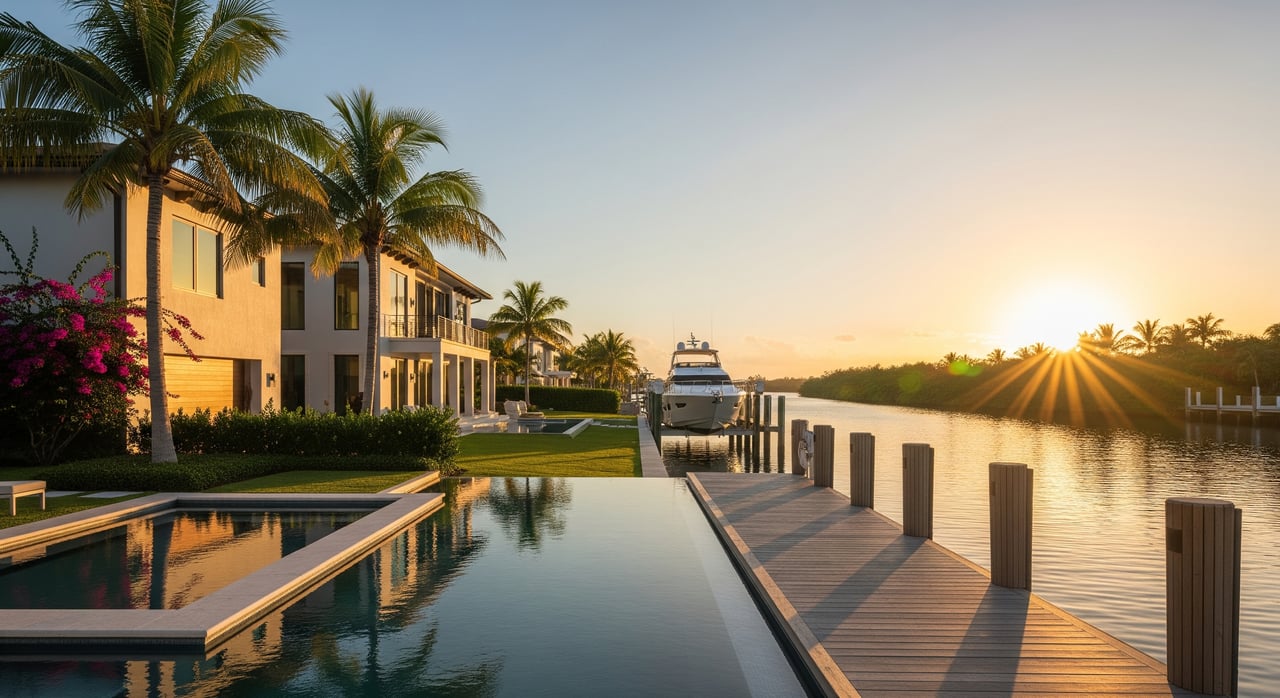
Guide to North Palm Beach Waterfront Communities
January 1, 2026
January 1, 2026
Is your perfect day on the water just a short cruise from home? If you’re comparing waterfront communities in North Palm Beach, details like inlet access, slip rights, and HOA rules shape your boating routine and long-term costs. It can feel complex, especially if you’re balancing lifestyle and investment goals. This guide gives you a clear framework to evaluate boating access, marina proximity, club culture, HOA structures, and maintenance so you can choose with confidence. Let’s dive in.
North Palm Beach sits along the Intracoastal Waterway, the regional boating corridor that parallels the Atlantic. The main ocean access for this area is the Lake Worth Inlet, sometimes called the Palm Beach Inlet. How you reach the ICW and inlet will determine your typical transit time and how often you use your boat.
Mean low-water depth at your dock and along your route matters, especially for deeper-draft vessels. Ask for posted depths, recent channel soundings, or marina logs if available. Shallow areas may require periodic dredging, which can lead to downtime and added cost.
Identify every bridge between your slip and the Lake Worth Inlet. Verify vertical clearances and any drawbridge schedules that could affect weekend departures or returns. Always confirm your vessel’s height to the highest point for safe passage.
Measure distance and estimate timing at your normal cruising speed with no-wake zones included. This is especially useful for dayboaters who want short runs to the inlet or nearby sandbars. A realistic plan avoids surprises after closing.
Look for well-marked channels, lighting on docks, and visible markers near your route. Consider nearby towing and salvage availability and whether your insurance requires certain safety features on the dock or vessel.
If you run a larger cruiser or sportfish, proximity to robust marina services can be essential. Evaluate how quickly you can reach fuel, pump-out, shore power, and haul-out. Review travel-lift capacity, on-site mechanical and electrical service, and whether emergency help is nearby. If you prefer lower-maintenance ownership, a condo or gated community with managed docks and staff can reduce your weekly to-do list.
Slip ownership drives usability and resale value. The assignment model in your community determines how secure your access is and how it transfers at sale.
Confirm the permitted length overall, beam, and piling spacing. Ensure your boat’s true LOA, including pulpits and platforms, fits within the rules. Clarify power availability, water hookups, and any limits on lifts or davits.
In the North Palm Beach and greater West Palm Beach to Boca Raton corridor, communities are governed by condominiums, homeowners’ associations, or cooperatives. Each framework has different rules and obligations under Florida law. Your lifestyle and cost profile will flow directly from these documents and how the association is managed.
Before you move forward, ask for bylaws, covenants, recent meeting minutes, current budgets, insurance certificates, reserve studies, and any dock or seawall inspection reports. Review recorded slip rights, license agreements, and any permits attached to marine work. A careful read of these materials will spotlight risk, timing, and potential assessments.
Waterfront ownership includes marine systems that require care and budget planning. Understanding what the association covers versus what you must handle personally is key.
Saltwater is tough on materials. Pilings, hardware, and electrical systems require periodic inspection and replacement. Many owners transition to composite decking and upgraded pilings over time. Shore power must meet code and is a common source of issues if not maintained.
Seawalls are capital-intensive and can drive special assessments when replacement is due. Confirm who owns the seawall, how reserves are funded, and whether recent inspections recommend near-term work. Permit requirements apply for reconstruction and can affect timelines.
Private canals and marina basins sometimes need dredging to maintain safe depth. This is typically a shared cost handled by associations or through special assessments. Ask for dredging history and any schedule or survey data the marina maintains.
Expect rules around mangrove trimming, seagrass, and manatee protection zones. Seasonal speed restrictions and local wake ordinances can shape your route and timing. If you plan dock changes or lift installations, confirm what state and county permits are required.
Waterfront properties often sit in higher-risk flood zones, which can affect insurance premiums and lender requirements. Windstorm coverage is a significant cost in South Florida. Some associations carry master policies for common elements, while owners still maintain individual hull, liability, and flood policies. Inspections may require proof of seawall integrity and compliant electrical systems.
Dock components can require major work every 10 to 30 years depending on exposure and materials. Seawalls tend to have longer lifecycles but are costly when replacement is needed. Planning for reserves and contingency capital protects your long-term budget.
Waterfront due diligence takes longer. Build time into your contract period for association document review, marine inspections, and legal review of slip rights. Maintain a contingency budget for docks, seawalls, or dredging even in well-managed communities. A careful plan protects both your lifestyle and your investment.
In North Palm Beach and across Palm Beach County, small differences in access, governance, and infrastructure can make a big impact on how you boat and what you spend. A calm, detail-led approach helps you focus on what matters most to your lifestyle while mitigating risk. For discreet guidance and curated property options, connect with Leila Kallop to request a private consultation.
Stay up to date on the latest real estate trends.
Leila has been a Jupiter Island resident since 2011 and brings a deep understanding of the island’s luxury waterfront properties. Residing on South Beach Road provides her a unique perspective on what makes Jupiter Island real estate so exceptional.
LEILA KALLOP
WILLIAM RAVEIS REAL ESTATE
2 S Beach Rd
Jupiter Island FL 33455