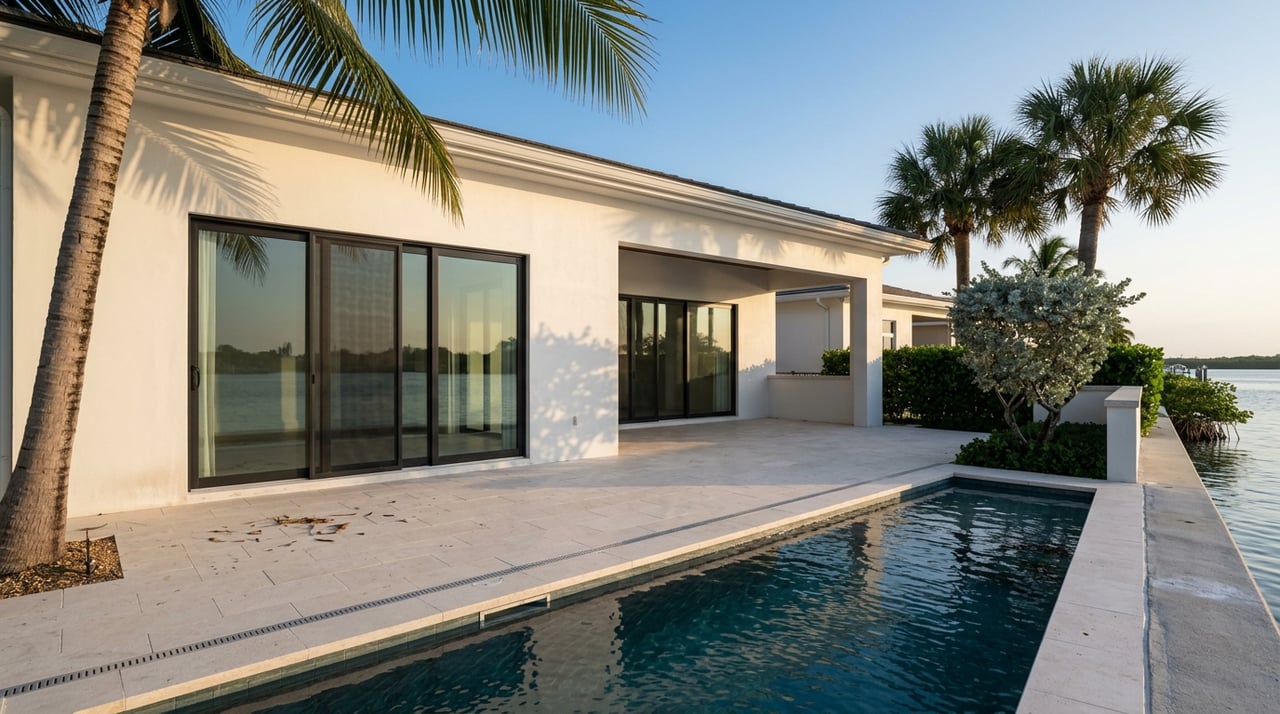
Why Jupiter Island Barrier Island Stands Apart in Florida
June 4, 2026
June 4, 2026
If you are comparing Florida’s island communities, Jupiter Island stands apart almost immediately. Some islands lead with shops, public attractions, or resort-style amenities, while Jupiter Island is defined by something quieter: privacy, low density, and a planning framework built around conservation and single-family estate living. If you want to understand how that difference affects lifestyle, access, and long-term appeal, this guide will help you see where Jupiter Island fits. Let’s dive in.
Jupiter Island is a small barrier-island town in Martin County with a 2025 permanent population of just 840. That alone puts it in a different category from many better-known Florida islands, which operate at a much larger scale.
The town’s planning documents reinforce that small-scale character. Its primary land uses are single-family residential homes and estates, along with conservation and preservation. The same documents state that additional commercial development generally should not be permitted except where it improves services at the Jupiter Island Club and the Hobe Sound Yacht Club.
For you as a buyer or owner, that means the island is not trying to become a busier destination. Its identity is rooted in estate living, limited intensity, and long-term stewardship.
The daily rhythm on Jupiter Island is more residential than commercial. The town maintains The Ramble, a pedestrian and bicycle path, and the 30 mph speed limit encourages slower movement, including golf carts as an alternative transportation option.
That low-intensity pattern matters when you compare Jupiter Island to other Florida islands. You are not choosing a place built around nightlife, dense retail, or a packed calendar of public programming. You are choosing a quieter coastal setting where the surrounding landscape plays a leading role.
Protected land is a major part of that experience. The Nathaniel P. Reed Hobe Sound National Wildlife Refuge includes the largest contiguous stretch of undeveloped beach in Southeastern Florida, and Blowing Rocks Preserve protects 73 acres of native coastal habitat and shoreline on Jupiter Island.
One of the clearest differences between Jupiter Island and other Florida islands is how public beach access is handled. According to the town’s coastal-management rules, public beach access is limited to Blowing Rocks Preserve, Hobe Sound Beach, and the Hobe Sound National Wildlife site.
The same rules prohibit beach driving and state that no further public beach access points with parking should be developed. This is a meaningful distinction if you are weighing privacy, daily use patterns, and how heavily trafficked an island may feel over time.
Shoreline protection is also part of the island’s long-term framework. The Beach Protection District was created by state law to fund shoreline protection, and the town describes it as part of one of the longest-running beach nourishment programs in the United States.
Palm Beach offers a very different island experience. Its official town materials highlight shopping, restaurants, a marina, recreation centers, the Lake Trail, and 12 miles of beachfront with two public beaches.
Palm Beach also operates on a much larger scale, with a 2025 population estimate of 9,423. Compared with Jupiter Island’s 840 residents, Palm Beach is far more service-oriented and destination-focused.
If you prefer an island with more public-facing amenities and a more active town-center feel, Palm Beach may appeal to you. If your priority is a more secluded residential setting with less commercial intensity, Jupiter Island presents a very different value proposition.
Key Biscayne is another island that differs sharply from Jupiter Island. The village describes an abundance of parks, a community center, a library, regional parks, and resident-only waterfront access at Beach Park via key fob.
Its 2025 population estimate is 14,815, making it substantially larger and more publicly programmed. In practical terms, Key Biscayne offers a denser amenity base and a more active community infrastructure.
For you, the choice comes down to lifestyle priorities. Jupiter Island is more estate-centered and private, while Key Biscayne is more amenity-dense and civic in character.
Longboat Key also leans more toward public recreation and access than Jupiter Island. Official town materials emphasize multiple public beach accesses, public parks, and a town recreation center used by residents and visitors.
Its 2025 population estimate is 7,359, again much larger than Jupiter Island. That supports a different kind of island environment, one where public amenities play a bigger role in daily life.
Jupiter Island, by contrast, is more selective in public access and more intentionally low intensity. If you are drawn to a quieter setting with fewer public touchpoints, that distinction may matter a great deal.
Sanibel shares one important trait with Jupiter Island: a strong connection to nature and conservation. Even so, the two islands are not interchangeable.
Sanibel is more visitor-facing, with seven beach parks and a 26-mile shared-use path network across the island. Its 2025 population estimate is 6,303, and its public access network is much broader.
Jupiter Island is more limited in access and more centered on private estate living. So while both islands reflect environmental value, Jupiter Island takes a more selective and residential approach.
Fisher Island may be the closest peer when people think about exclusivity, but the lifestyle model is still different. Its official materials say access is by ferry, and its amenity mix includes golf, tennis, marinas, dining, spa, and beach club facilities.
That makes Fisher Island more club- and resort-centric. Jupiter Island feels less like a self-contained resort environment and more like a legacy coastal town shaped by low-density homes, conservation land, and privacy.
If you are choosing between the two, the question is not simply exclusivity. It is whether you want a resort-style amenity structure or a more understated estate-and-landscape setting.
| Island | 2025 Population | General Character | Public Access and Amenities |
|---|---|---|---|
| Jupiter Island | 840 | Low-density, estate-focused, conservation-oriented | Limited public beach access, low-intensity circulation |
| Palm Beach | 9,423 | Service-oriented, destination-focused | Shopping, dining, marina, recreation centers, public beaches |
| Key Biscayne | 14,815 | Amenity-dense, publicly programmed | Parks, library, community center, regional parks, waterfront access |
| Longboat Key | 7,359 | Recreation-oriented | Public beach accesses, parks, recreation center |
| Sanibel | 6,303 | Nature-focused, visitor-facing | Seven beach parks, 26-mile shared-use path network |
| Fisher Island | Not provided in the research | Resort- and club-centric | Ferry access, golf, tennis, marinas, dining, spa, beach club |
If you are considering Jupiter Island, it helps to frame the decision correctly. The island’s appeal is not about having the widest menu of public amenities. It is about scarcity, privacy, natural buffering, and a local policy framework that protects low-density residential character.
That can be especially important if you value discretion and a quieter day-to-day environment. Jupiter Island offers a setting where land use, shoreline policy, and circulation patterns all support a more private coastal lifestyle.
For buyers looking at Florida islands broadly, Jupiter Island is best understood as a niche market. It stands out not because it competes with larger islands on activity or access, but because it intentionally does not.
From a long-term perspective, Jupiter Island’s market story is closely tied to stewardship. The town’s land-use restrictions, conservation emphasis, limited public beach access, and shoreline protection framework all support an island identity built around preservation rather than expansion.
For you, that can shape how you think about desirability over time. Rather than relying on resort turnover or high-volume visitor demand, Jupiter Island’s appeal is more closely linked to enduring scarcity and the protection of its residential and natural character.
That does not make it the right fit for every buyer. But if your priorities include privacy, legacy considerations, and a highly controlled coastal environment, Jupiter Island occupies a very specific place in Florida’s luxury-island landscape.
If you are weighing Jupiter Island against other Florida islands, the most important step is looking beyond price or name recognition and focusing on the lifestyle each place is designed to support. Jupiter Island is quieter, smaller, and more protected than many of its peers. For the right buyer, that difference is exactly the point.
For a discreet, informed conversation about Jupiter Island properties, off-market opportunities, or how the island compares with nearby luxury coastal options, connect with Leila Kallop.
Stay up to date on the latest real estate trends.
Leila has been a Jupiter Island resident since 2011 and brings a deep understanding of the island’s luxury waterfront properties. Residing on South Beach Road provides her a unique perspective on what makes Jupiter Island real estate so exceptional.
LEILA KALLOP
WILLIAM RAVEIS REAL ESTATE
2 S Beach Rd
Jupiter Island FL 33455